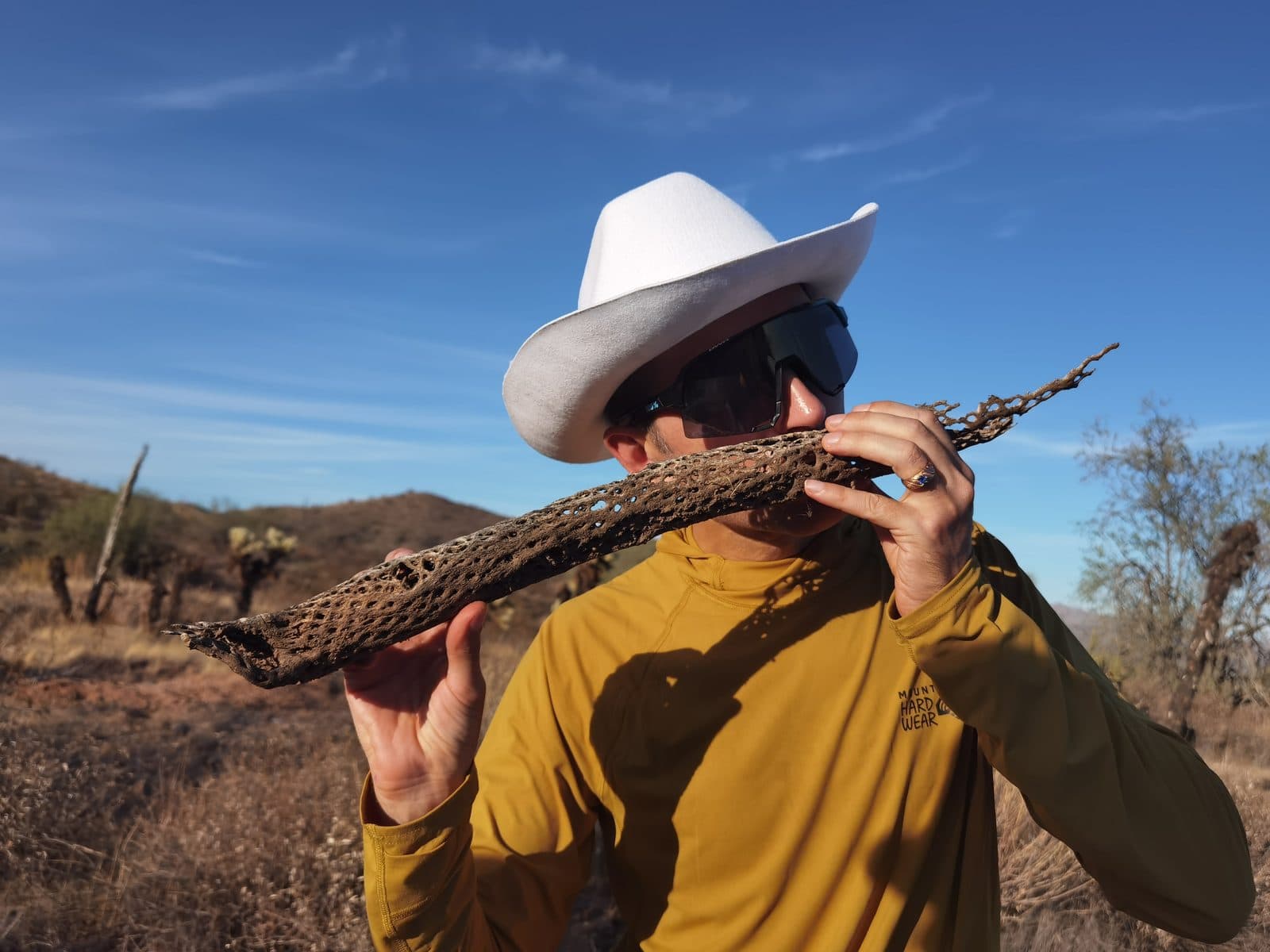
The streets of Leningrad shaped my childhood. I had a home and a good mother, but I was out there every single day. I got into fights. I had run-ins with the police. I was a bully. There was alcohol. And there were plenty of other problems. But one of my weirdest traits, even in that environment, was my reading habit. I could spend as many as ten hours a day reading. Not the usual classics prescribed to teenagers under the Soviet regime, but a 31-volume collection of hard-to-get James Hadley Chase detective stories (not in the original English, of course). Or a 19-volume set of barely readable Russian translations of Stephen King. My mother happened to be the president of a local book club, but even she could not find enough books to keep up with me. Then there were sports, like boxing, that helped me survive.
My first running influence, though he never called himself a runner, was my grandfather, Moisey. He ran every single day of his life until he was sixty, then walked every single day until he was ninety-six. When he jogged in the morning during his summer visits, I jogged with him. Then life took over, and I did not run again for decades, until around 2010, in Japan, with my friend Marcus.
I wrote, too. Excessively, mostly for myself. My school teachers were suspicious of my writing style. Too good, they said. Where did you copy that from? My classmates thought I was a natural-born stand-up comedian. They would wait for another rolling-on-the-floor laughing session when “that clown” recited something like poetry in class with exaggerated intonation. My creative side shone through in mysterious ways. But my brother had one word for me: graphomaniac. He said that to my face as an accusation more than once. That was enough. I put the personal writing away.
I never stopped writing, exactly. As a computer programmer I wrote code and technical manuals. As a lawyer I drafted legal text. My reading turned technical too: law treatises, programming manuals, medical textbooks, pharmaceutical digests. And yogic scriptures. Long before moving to the States in 1997, I read Sri Aurobindo in Russian. In New York, one trip to the library got me The Synthesis of Yoga in English. Understanding the book took years, and I’m still walking that path.
Fast forward to Dream Run, the camp Matt Fitzgerald hosts from his home in Flagstaff, Arizona. By then my running had developed into a decade of avid road miles, and increasingly, soft trails. I did not realize Matt was a prominent running writer until I met him at the camp. Flagstaff is a special place. Each breath of its fragrant air gave me an intoxicating surge of unpolluted oxygen, laced with the scent of ponderosa pines. Its grounds invited endless trail exploration in every direction. Every moment there was pure bliss.
That is why the camp surprised me. Here we were, runners in one of the best running places on earth, yet so many seemed unhappy. Some had goals they were trying to meet, and they suffered. When these runners introduced themselves, everyone said what they did for a living and what their goals were. When my turn came, I said only, “I am a human being.” It was not a rehearsed line. It came to me in that moment, and somehow, it landed. In the book, Matt dubbed me Mr. “I am a human being.”
Every day around noon, about a dozen of us gathered on the couches in the living room and went around the circle with Matt’s idea of “wins and challenges,” where he asked each of us to share our daily impressions. I never liked these “wins and challenges.” My belief was that there were no such things; life is one sheer existence. One day I offered to write something for our next meeting. Matt said yes. The next day, I read a few paragraphs to the group: “My morning run was meant to be free from any schedules and agendas… A child of nature, a child of this life, immersed in the discipline of purification through the practice of running, I was in direct and living contact with the Divine.”
Matt asked me for those paragraphs that winter, and I emailed them to him word for word. He wrote back, “Thanks! Beautiful piece of writing.” Then he asked if he could include them in his book. They made it into the book.
To be honest, I am not always in that state of mind, even now. My running can be ego-driven, too. I can chase a personal best or a big mileage number. Even the wish to overcome the ego is the ego itself.
Dying to Run is about Matt entering the 100K at Javelina Jundred, an ultramarathon scheduled for October 2024 in Arizona’s Sonoran Desert. After four years of long COVID and three years without running, he was badly deconditioned and undertrained. He risked his embodied existence for the chance to find closure on what he considered unfinished business. On that crowded race morning, among cutthroat ultrarunners, he seemed to me like the lead actor in his own one-man kamikaze mission. It was the opposite of Bryan Johnson’s Don’t Die.
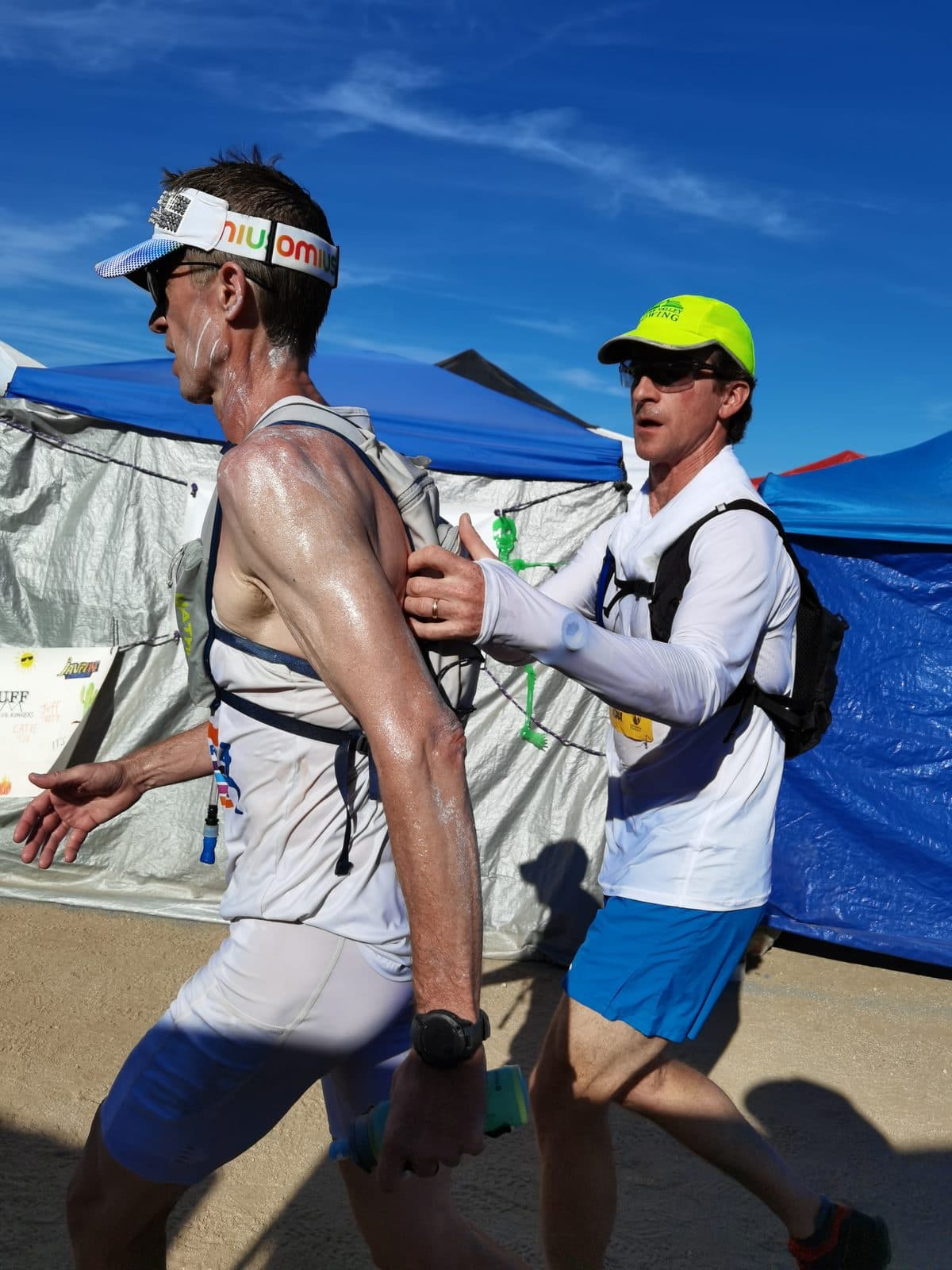
As his houseguest and a member of his crew, I witnessed the entire event unfold. Our crew drove down together from his Flagstaff home in his Dream Mobile minivan. My main duty was to carry a boom mic that looked like a dead cat’s tail, and I took snapshots on my phone. The other crew members handled his fueling, hydration, ice, and whatever else Matt needed to survive the heat that made the desert feel unlivable even for Martians. Matt’s close friends paced him. I wanted to pace him too, but those pacing spots had been filled months in advance.
The rest of the story is Matt’s to tell. I will say only this. On the drive back from the race the next day, at lunch in Camp Verde, where Matt treated the whole crew, we got news nobody expected. It had to do with the race organizers. I’m not going to say in this review what happened. You will have to read about it in his book.
To say the least, there was a lot of uncomfortable silence. Someone in the van said he should file a protest with the organizers. Sitting behind Matt as he drove back home, I asked him if he had seen The Matrix. He said he hated it. He had walked out of the movie theater after thirty seconds because he found it so cliché. I told him anyway. Don’t be like Cypher, the man who asked Agent Smith to reinsert him into the Matrix. That conversation is not in the book, so I am putting it here.
A year later I flew back to Arizona to support him at Javelina again. That race did not happen for him, and you will have to find out why from his book.
My friend Erik, the one who introduced me to Dream Run, read Matt’s book first. “I’m already more than halfway through the book, and your name is in there pretty much throughout,” he texted me. Then I found an audio preview and heard my own name. I had some idea it was coming, since Matt had asked for my mini-essay and I had told him he could use anything I wrote. But I had no idea how much of me he had kept. I said plenty of things at that camp that made people laugh or take notice. Without a professional writer around, I would have forgotten them. Matt kept them. To my surprise, the underlying idea of racing for the experience, not the result, appears in the book more than once. I also gave Matt a copy of Sri Aurobindo’s The Synthesis of Yoga, and its influence shows in the story.
Should you read Dying to Run? You should. It is powerful and emotional. It has depth, struggle, and drama. The prose is beautiful and funny at times; it made me choke up with emotion and laugh as I moved through the chapters. Matt, you are a hell of a writer.
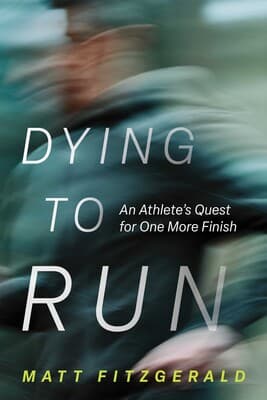
Get Dying to Run
By Matt Fitzgerald · Available in print, ebook, and audiobook.
As an Amazon Associate I earn from qualifying purchases.
Kindle edition · Book details and other retailers · Free excerpt from Matt
Looking for Martin's book? The Kenyan Running Method is our free training guide, with a PDF to keep.